Grip Strength And Aging
Grip strength measures how hard a person can squeeze a hand dynamometer for a short burst. Clinicians and researchers use it because it reflects more than hand muscles: it tracks neuromuscular function, muscle mass, and overall physical capacity. In aging populations, lower grip strength has been linked with higher rates of mobility limitations, falls, and disability, and it often tracks with other markers of frailty.
“Cutoffs” are threshold values used to categorize grip strength as low versus higher. They are not universal. A cutoff depends on the device, the testing position, the number of trials, the dominant hand, and the population studied. For example, a cutoff derived from community-dwelling adults may not match results from a frail clinic population, and a cutoff from one dynamometer model may not match another.
In practice, grip strength can be a useful screening signal. A person who notices a decline in grip strength over time may also notice reduced ability to open jars, carry groceries, or rise from a chair without using arms. These everyday tasks involve grip force plus coordination and whole-body strength, so grip strength can mirror broader functional changes.
Main Problems With Cutoffs
People often treat grip strength cutoffs as a diagnosis of “healthy” or “unhealthy” aging. Cutoffs are better understood as risk stratifiers: they group people by likelihood of future outcomes, not by current health status. Two people can share the same grip strength value yet differ in balance, endurance, chronic disease burden, and activity level.
Another common mistake is assuming a single number applies to everyone. Many studies report sex-specific thresholds because average grip strength differs between men and women. Age also matters: grip strength typically declines gradually with age, so a value that is low for an older adult may be average for a younger adult.
Measurement method changes the result. Testing position (standing versus seated), elbow angle, whether the arm is supported, and whether the person uses maximal effort all influence readings. Even the number of attempts matters; dynamometers often show higher values after practice trials. If someone compares their result to a cutoff without matching the method, the comparison can mislead.
Biologically, grip strength relates to muscle quality and neuromuscular performance. Aging is associated with loss of muscle mass, changes in motor unit recruitment, and reduced muscle fiber function. Chronic inflammation, inadequate protein intake, low physical activity, and certain medical conditions can accelerate these changes. Grip strength also correlates with leg strength and balance because people who lose overall muscle function often lose grip strength too.
Real-world consequences of low grip strength include difficulty with tasks that require sustained or repeated force, such as opening jars, pulling up zippers, carrying shopping bags, and using tools. Low grip strength can also co-occur with reduced hand dexterity and slower reaction time, which may contribute to higher fall risk in some older adults. The key point is that grip strength is a marker of broader physical capacity, not a stand-alone explanation for disability.
How To Interpret Thresholds
When you see a grip strength cutoff, check four details: the sex, the age range, the testing position, and the device or protocol. Many cutoffs come from cohort studies that measured grip strength at baseline and followed participants for outcomes. Those thresholds reflect the distribution and risk patterns in that specific population.
Some widely cited research uses the concept of “low grip strength” to predict adverse outcomes. For example, the European Working Group on Sarcopenia in Older People (EWGSOP) has used grip strength as a screening measure for suspected low muscle strength in the context of sarcopenia, with sex-specific thresholds. The exact values and how they are applied depend on the EWGSOP version and the measurement protocol used. Because readers often encounter different numbers online, it helps to verify which guideline or study the cutoff came from and whether the measurement method matches.
Interpretation should also consider trends. A single measurement can be affected by pain, temporary illness, poor sleep, or unfamiliarity with maximal effort. A decline over months, especially alongside reduced ability to perform daily tasks, is more informative than one reading.
Solutions And Recommendations
Measure With Consistent Method
Use the same dynamometer, position, and protocol each time. If you test at home, follow the device instructions closely and record the setup: seated or standing, elbow position, arm support, and whether you test the dominant hand first. In many protocols, people perform multiple trials and use the highest value. Consistency matters more than the absolute number when tracking change.
In practice, a simple approach is to test twice on each side on a given day, with a short rest between attempts, then record the best value for the dominant hand. If you compare to a published cutoff, match the study’s approach as closely as possible. If you cannot match it, treat the cutoff as a rough reference rather than a pass/fail threshold.
What outcomes to expect: grip strength often improves with practice and resistance training, but the magnitude varies widely. In general fitness settings, people may notice measurable changes over several weeks, while larger gains depend on training consistency and baseline strength.
Train Grip With Progressive Loads
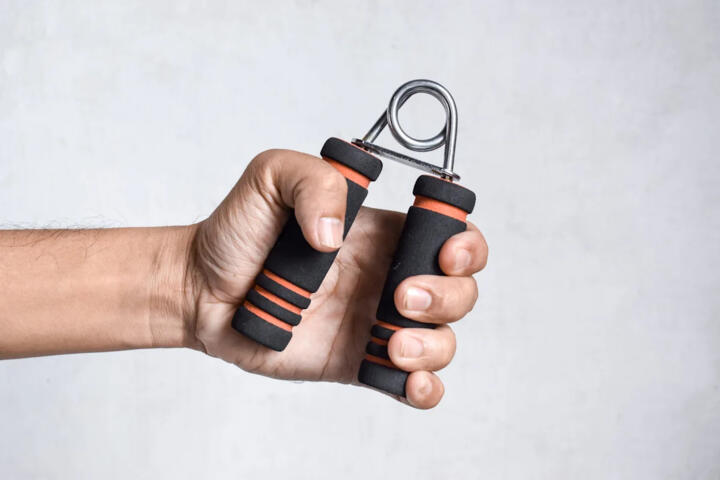
Grip strength responds to resistance training. Training can include hand-specific work (such as squeezing a dynamometer-like device or using hand grippers) and whole-body work that supports grip demands (such as carrying weights and pulling movements). Progressive overload means gradually increasing resistance or difficulty while maintaining good technique.
Why it works: grip training strengthens the forearm flexors and improves neuromuscular drive to the hand. It also improves the ability to recruit motor units quickly, which matters for maximal squeeze force. Whole-body strength training can indirectly support grip by improving posture, shoulder stability, and overall muscle function.
What it looks like in practice: start with a manageable resistance that allows multiple controlled squeezes without pain. Many people use short sessions several days per week rather than one long session. A practical target is to train 2–4 days per week and progress slowly over time, monitoring for discomfort in the wrist, elbow, or forearm.
Relevant tools: hand grippers, pinch devices, wrist/forearm resistance bands, and weighted carries. If you use grippers, avoid training through sharp pain and consider alternating grip types (crush grip versus pinch grip) to distribute load.
Address Nutrition And Activity
Low grip strength often coexists with low muscle mass and reduced physical activity. Adequate protein intake supports muscle protein synthesis, and regular resistance training supports muscle adaptation. Physical activity also improves circulation and neuromuscular coordination, which can affect strength performance.
What to do: review whether meals include protein at each eating occasion and whether daily movement includes strength- and balance-challenging activities. If appetite is low or diet is restricted, a clinician or registered dietitian can help assess intake patterns; this is especially relevant for older adults.
Realistic outcomes: nutrition and activity changes tend to influence strength gradually. Improvements in grip strength typically track with broader strength gains, so expecting rapid changes after diet changes alone is unrealistic.
Watch For Red Flags
Grip weakness can reflect more than age-related muscle decline. Sudden or rapidly progressive weakness, numbness, severe pain, or loss of hand function beyond what would be expected from deconditioning warrants prompt medical evaluation. Persistent swelling, redness, or inability to use the hand normally also needs assessment.
Why this matters: nerve problems, inflammatory conditions, and tendon injuries can affect grip force and hand function. Training through these issues can worsen symptoms or delay appropriate care.
What to do in practice: if grip weakness is accompanied by neurologic symptoms (such as tingling, numbness, or changes in coordination), stop self-testing and seek evaluation. If pain limits effort, adjust training and discuss options with a qualified health professional.
Educational Case Examples
Example 1: Tracking A Decline
A 72-year-old woman tests grip strength at home using the same seated protocol each month. Her dominant-hand grip drops from a higher baseline to a lower value over three months. She also reports slower ability to open jars and carry a light bag. She repeats testing after a rest day to reduce fatigue effects and confirms the decline. She then focuses on progressive forearm and whole-body resistance training while maintaining consistent measurement. Over the next two months, her grip improves modestly, and jar-opening becomes easier, supporting the idea that the change reflected modifiable physical capacity rather than a one-time measurement error.
Example 2: Comparing To A Cutoff
A 65-year-old man reads an online cutoff for “low grip strength” but measured his grip standing with a different dynamometer setup than the study described. His value falls below the cutoff, yet he has no difficulty with daily tasks and reports stable strength. He repeats testing using the closest possible protocol to the study and finds his value is higher, though still near the threshold. He treats the cutoff as a risk signal rather than a definitive marker of health status and uses it to guide a short period of consistent grip and resistance training, with attention to pain-free technique.
Grip Strength Cutoff Checklist
| Decision Point | If Yes | If No | What To Do Next |
|---|---|---|---|
| Sex and age match the cutoff source | Comparison is more meaningful | Risk interpretation may be off | Use the cutoff as a rough reference and focus on trends |
| Testing position matches | Values are more comparable | Values may be systematically higher or lower | Repeat testing using the closest protocol available |
| Multiple trials were used | Highest value better reflects capacity | Single attempts can understate strength | Test again with consistent rest and repeat trials |
| No pain or neurologic symptoms | Lower grip likely reflects strength capacity | Other causes may be present | Seek medical evaluation before training through symptoms |
| Trend over time is assessed | Changes reflect real capacity shifts | Single readings may mislead | Track monthly or after training blocks |
Common Mistakes
Comparing a home measurement to a published cutoff without matching protocol is a frequent error. Differences in elbow support, wrist position, and whether the person is seated or standing can shift results enough to change whether someone appears above or below a threshold.
Another mistake is testing during fatigue or after an intense workout. Forearm muscles can be temporarily depleted, and grip force may drop even when overall strength is stable. Testing on a consistent day relative to exercise helps reduce this noise.
People also overinterpret one low reading. Grip strength varies with motivation, familiarity, and temporary factors like pain or illness. Repeating measurements and looking for a trend reduces the chance of acting on a measurement artifact.
Training through sharp pain in the wrist, elbow, or forearm is risky. Tendon irritation and nerve compression can worsen with continued squeezing or repetitive gripping. Pain that changes sensation or causes persistent weakness should prompt medical evaluation.
FAQ
What Is Grip Strength Used For?
Grip strength is used as a quick measure of hand and forearm strength that correlates with broader physical capacity in older adults. It helps identify people who may have higher risk of mobility limitations, especially when interpreted alongside other factors and consistent testing methods.
Are Grip Strength Cutoffs The Same For Men And Women?
Most published cutoffs are sex-specific because average grip strength differs between men and women. Age range and testing protocol also change the threshold values, so the cutoff should match the source population and method.
How Should I Test Grip Strength At Home?
Follow the dynamometer instructions and keep the setup consistent: seated or standing position, elbow angle, arm support, and whether you use multiple trials. Record the best value from repeated attempts and track changes over time rather than relying on one number.
Can Low Grip Strength Be Temporary?
Yes. Pain, recent heavy use of the forearm, poor sleep, unfamiliarity with maximal effort, and acute illness can reduce grip force. Repeating tests after rest and checking for a trend helps distinguish temporary effects from persistent weakness.
When Should Weak Grip Be Checked By A Clinician?
Seek evaluation for sudden or rapidly worsening weakness, numbness or tingling, loss of hand coordination, severe pain, or inability to use the hand normally. These features can indicate causes beyond age-related muscle decline.
Author's Insight
Grip strength cutoffs link to healthy aging because they reflect muscle strength, neuromuscular function, and overall physical capacity that tend to decline with age. The strongest practical lesson is methodological: cutoffs only make sense when sex, age, and testing protocol match the source. For consumers, the most useful approach is consistent measurement and attention to functional changes in daily tasks. If weakness is accompanied by neurologic symptoms or sharp pain, evaluation should come before training-focused self-management.
Key Takeaways
- Grip strength cutoffs are risk thresholds, not diagnoses, and they vary by sex, age, and testing protocol.
- Measurement consistency matters: position, trials, and dynamometer setup can change results enough to affect cutoff comparisons.
- Grip strength often improves with progressive, pain-free resistance training and broader strength activity.
- Sudden weakness, numbness, or severe pain warrants medical assessment rather than self-training.
- Track trends over time and relate numbers to real daily hand tasks.