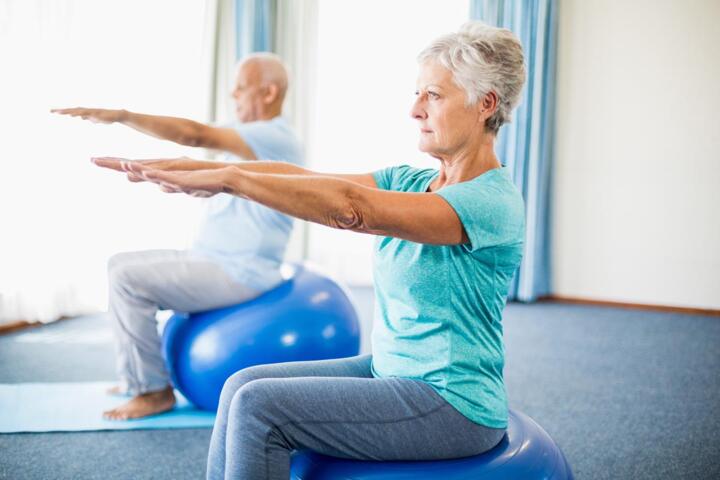
Balance Training And Fall Risk
Fall risk is not a single number. It reflects how well your balance system handles everyday challenges such as turning in a hallway, stepping off a curb, reaching for an object, or reacting when something shifts underfoot. Balance training aims to improve the ability to detect body position, coordinate muscle responses, and control movement during tasks that resemble real life.
Clinicians often use balance and mobility tests to estimate fall risk and to track change over time. These tests do not predict every fall for every person, but they can help identify patterns such as slow walking speed, difficulty with turning, poor weight shifting, or unstable standing when vision or support changes. For example, a person who can stand still for a long time may still struggle when turning quickly or when stepping over an obstacle.
In practice, test selection depends on the setting and the goal. A home-based program may focus on simple measures that can be repeated safely. A clinic-based program may include more detailed assessments of postural control, gait, and functional mobility. The key is matching the test to the balance problem you are trying to address.
Common Misreads And Why They Matter
People often treat balance tests as direct “fall predictors.” Many tests correlate with fall history or future risk, but they measure specific components of balance rather than the full set of factors behind falls. Falls also depend on environmental hazards, footwear, medication effects, fatigue, and how quickly a person can recover after a trip or slip.
One common mistake is focusing on a single static test. Standing still with eyes open may look normal even when dynamic control is impaired. Dynamic balance involves rapid adjustments during gait, turning, reaching, and stepping. A person may score well on a static balance task yet still have difficulty with weight transfer and foot placement during movement.
Another misread involves ignoring test conditions. Balance performance changes when vision is removed, when stance width changes, when the surface is compliant, or when a task adds a cognitive load. A test performed with eyes open on a firm surface may not reflect the challenges of dim lighting, busy environments, or uneven ground.
Biologically, balance depends on sensory input (vision, vestibular function, and somatosensory feedback from the feet and joints), central processing, and motor output. Training can improve reaction timing, strengthen key muscle groups, and refine movement strategies. However, the nervous system adapts differently across individuals, so the same training plan may produce different test changes.
Real-world consequences of misinterpretation include underestimating risk when a person has good static balance but poor turning control, or overestimating risk when a test is performed under unusual conditions. Either scenario can lead to poor planning: too little training for someone who needs dynamic practice, or excessive restriction for someone whose risk is driven by a specific trigger such as medication timing or nighttime mobility.
Tests That Reflect Balance Control
Several tests are used in clinical and research settings to estimate fall risk. They differ in what they measure: postural sway, ability to change position, walking mechanics, and functional mobility. The most useful approach is to select tests that match the person’s likely fall scenarios and to interpret results alongside history, medication review, and functional observations.
Below are common categories of tests and what they tend to capture. Exact cutoffs vary by population and study design, so the same score may not mean the same risk level across settings.
- Static balance tests (for example, standing with feet together or in a narrow stance) often reflect postural sway control and sensory integration.
- Dynamic balance tests (for example, stepping tasks, reaching tasks, or limits-of-stability measures) reflect weight shifting, foot placement, and recovery strategies.
- Gait and mobility tests (for example, timed walking or turning measures) reflect coordination, step timing, and how the body handles transitions.
- Functional performance tests (for example, sit-to-stand or obstacle negotiation) reflect strength, motor planning, and the ability to complete real tasks.
How To Choose And Interpret Tests
Match The Test To The Risk
Choose tests that reflect the balance demands most likely to trigger falls. If a person reports near-falls during turning, a turning-related mobility measure may reveal deficits that static standing tests miss. If instability appears during stepping over objects, stepping and obstacle tasks can be more informative than a sway-only measure.
This works because balance problems are often task-specific. The nervous system uses different strategies for quiet standing versus walking, and it changes control when the task includes speed, direction changes, or obstacle clearance. In practice, a clinician may pair a mobility test with a dynamic balance task to cover both transitions and recovery.
Tools and methods can include timed walking, turning trials, and stepping tasks performed under controlled conditions. Realistic outcomes are usually expressed as change over time rather than a single “pass/fail” score, since day-to-day performance varies with fatigue, pain, and attention.
Use Standardized Protocols
Interpret results using the same protocol each time: same instructions, same surface, same footwear, and similar time of day. Small differences in setup can change performance, especially for tests that depend on vision or stance width.
Standardization works because it reduces measurement noise. For example, a person may perform better when allowed to use a handrail or when the test is explained differently. In practice, record the conditions alongside the score so that follow-up comparisons remain meaningful.
Relevant tools include a stopwatch, a consistent chair height for sit-to-stand tasks, and a marked walkway for timed gait. Many clinics also document whether the person needed a safety guard, touched an assistive device, or required verbal cues.
Track Change, Not Just Risk
Balance training decisions benefit from tracking trends. A single test session may reflect temporary factors such as soreness, poor sleep, or anxiety. Repeated measures over weeks can show whether training improves the specific balance component that the test targets.
This approach works because training effects often appear as improved movement efficiency, faster recovery, and better control during transitions. In practice, a person might show reduced time on a mobility test or fewer errors on a stepping task after a period of targeted practice.
Realistic outcomes depend on baseline ability and training dose. Many people show modest improvements in timed measures over several weeks, while others improve mainly in accuracy or confidence. If performance worsens, it may signal that the training load, technique, or safety strategy needs review with a healthcare professional.
Interpret Scores With Context
Use test results alongside fall history, medication timing, vision status, footwear, and environmental exposures. A person with frequent falls may have risk driven by factors not captured by balance tests alone, such as orthostatic blood pressure drops or sedating medications.
Context improves interpretation because falls are multifactorial. Balance tests capture motor control and sensory integration, but they do not directly measure reaction to sudden hazards, the effect of blood pressure changes, or the likelihood of encountering a slip or trip.
In practice, clinicians often combine test scores with a brief functional interview and observation during everyday tasks. Tools can include a medication list review, a home safety checklist, and observation of gait speed, turning strategy, and foot clearance.
Case Examples For Realistic Use
Example 1: An older adult reports near-falls when turning quickly after standing up. In clinic, they perform reasonably on a static standing task but show slow turning time and reduced control during a short pivot. A dynamic stepping task also reveals hesitations when placing the foot under the body. The test pattern suggests that training should emphasize turning mechanics, weight shifting, and safe recovery steps rather than only quiet standing.
Example 2: A caregiver wants to monitor progress after balance training. The person completes a timed walking test and a sit-to-stand test at baseline and again after several weeks. The walking time improves slightly, while sit-to-stand repetitions increase with less need for hand support. The improvement pattern suggests gains in functional strength and gait efficiency, even if a static balance measure changes little. The caregiver uses the trend to guide discussions about what tasks feel safer during daily routines.
Test Checklist And Comparison
| Test Type | What It Measures | Common Interpretation Pitfall | Best Use |
|---|---|---|---|
| Static Standing | Postural sway and sensory integration during quiet stance | Assuming good static control means low fall risk | Screening for sensory or sway control issues; baseline tracking |
| Dynamic Stepping | Weight shifting, foot placement, and recovery strategy | Ignoring task speed and stance width differences | Targeting falls during stepping, reaching, or obstacle negotiation |
| Timed Gait | Walking speed, coordination, and endurance under time pressure | Comparing scores across different walk distances or aids | Monitoring mobility change and identifying slow gait patterns |
| Turning/Transition | Control during direction changes and sit-to-stand transitions | Overlooking hand support or safety guarding during testing | Addressing falls during pivots, getting up, or hallway navigation |
Step-by-step checklist for decision support:
- List the situations where near-falls occur (turning, reaching, nighttime walking, uneven ground).
- Pick 1 static measure and 1 dynamic or mobility measure to cover both quiet stance and movement transitions.
- Use the same instructions, surface, and footwear each time; record any assistive device use.
- Track change over multiple sessions rather than relying on one score.
- Combine test results with fall history and medication or vision factors that tests may not capture.
Practical Common Mistakes
One mistake is testing without safety planning. Even low-complexity balance tasks can lead to a loss of balance, especially when a person is fatigued or anxious. A safe setup and appropriate supervision matter for both clinic and home settings.
Another mistake is changing the test conditions between sessions. Switching from bare feet to shoes, changing chair height, or using a different walking distance can create false “improvements” or “declines.”
People also overinterpret small score changes. Many balance measures have day-to-day variability. A modest change may reflect attention, pain, or motivation rather than training effect.
Some people ignore assistive device behavior. If a person uses a cane differently during testing than during daily life, the test may not represent real-world control. Recording whether the person used a device and how it was used helps interpret results.
Finally, some people treat test selection as the whole plan. A person’s fall risk can be driven by factors outside balance training, such as sedating medications, untreated vision problems, or hazards at home. Balance tests should inform a broader safety discussion rather than replace it.
FAQ
Which Balance Tests Best Predict Falls?
No single test predicts every fall. Tests that capture dynamic control—such as stepping, turning, and mobility under time—often align better with real-world fall triggers than static standing alone, but interpretation depends on the population and test protocol.
How Often Should Balance Tests Be Repeated?
Repeat measures often every few weeks when tracking training response, using the same setup each time. Day-to-day variability means one session rarely reflects true change.
Do Static Balance Tests Miss Risk?
Static tests can miss risk when falls occur during movement transitions like turning, stepping over obstacles, or getting up from a chair. Dynamic tasks usually capture those control demands more directly.
What Makes Test Scores Hard To Compare?
Differences in instructions, surface, footwear, assistive device use, and safety guarding can change performance. Comparing scores across different protocols can lead to misleading conclusions.
Should I Use Home Tests Without Supervision?
Some simple measures can be done safely with a stable setup and a plan to prevent falls, but balance testing still carries risk. If you have a recent fall, significant dizziness, or new weakness, discuss safe testing options with a healthcare professional.
Author's Insight
Balance training targets multiple systems that work together to keep you upright. Tests used in clinics often measure one slice of that system—postural sway, stepping control, or mobility during transitions—so they should be interpreted as indicators, not guarantees. The most useful approach pairs test selection with the person’s reported near-fall situations and tracks change over repeated sessions under consistent conditions. When test results conflict with daily experience, it often signals a mismatch between the test task and the real-world trigger.
Key Takeaways
- Fall risk reflects more than balance; tests estimate risk by measuring specific balance components.
- Static standing tests can miss problems that appear during turning, stepping, and transitions.
- Choose tests that match the situations where near-falls happen and keep test conditions consistent.
- Track trends over time and interpret scores alongside fall history, medications, and vision factors.