VO2 Max And Training Volume
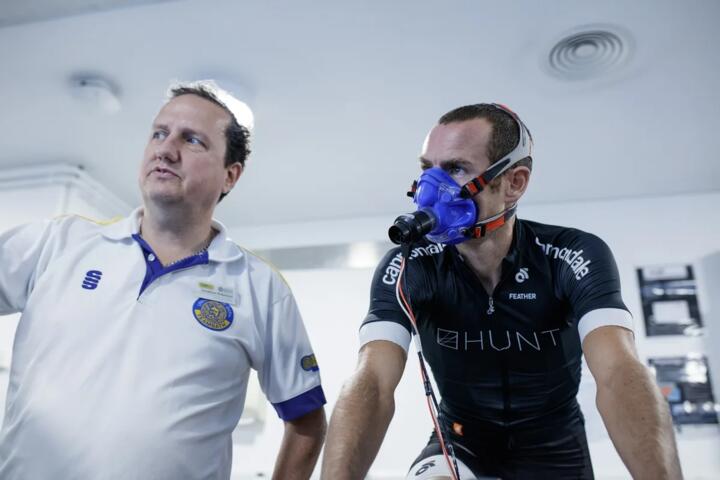
VO2 max is the highest rate at which your body can take in, transport, and use oxygen during intense exercise. It is usually reported in milliliters of oxygen per kilogram of body weight per minute (mL/kg/min). In practice, VO2 max is a marker of aerobic capacity rather than a direct measure of “fitness” in every sense, since strength, skill, and fatigue resistance also matter for performance.
Training volume refers to how much work you do over time, often expressed as weekly minutes, weekly distance, total sessions, or total “hard” minutes. Two people can train the same number of hours but with different intensity patterns, which changes the stimulus for VO2 max. For example, 6 hours per week of mostly easy jogging tends to produce different adaptations than 6 hours per week that includes repeated hard intervals.
VO2 max often rises when training volume increases in a way that repeatedly challenges oxygen delivery and oxygen use. Over time, the same volume may produce smaller improvements because the body adapts and the relative stress decreases. If volume increases faster than recovery capacity, VO2 max can stagnate or decline due to persistent fatigue, reduced training quality, and impaired recovery.
Common Misreads And Why They Matter
A frequent mistake is treating VO2 max as a single lever that responds linearly to more training. The physiology is more layered: oxygen uptake depends on lung ventilation and diffusion, oxygen transport depends on blood volume and hemoglobin, and oxygen utilization depends on mitochondrial density, oxidative enzymes, and muscle capillarization. Training volume influences all of these, but the effect depends on whether the sessions reach intensities that stress those systems.
Another misread is focusing only on “hard workouts” and ignoring the rest of the week. If easy days are too few, total volume rises while recovery falls, which can reduce the quality of interval sessions. Interval quality matters because VO2 max responds to repeated bouts that push a large fraction of the working muscles toward high oxygen demand. When intervals become sloppy—slower pace, shorter duration, or higher perceived effort—VO2 max stimulus drops.
People also misinterpret device estimates. Many wearables estimate VO2 max from heart rate patterns, speed, and sometimes power output. These estimates can drift with changes in running economy, temperature, hydration status, sleep, and sensor fit. A lab test provides a more consistent reference, but even lab results vary with protocol and day-to-day conditions.
Real-world consequences show up as plateauing or “roller-coaster” trends. A person may increase weekly mileage, see VO2 max rise for a few weeks, then notice a flat line while resting heart rate rises or sleep worsens. That pattern often reflects a mismatch between training load and recovery rather than a failure of aerobic adaptation.
Biologically, VO2 max improvements tend to come from a combination of central and peripheral changes. Central adaptations include improved stroke volume and blood volume, which raise cardiac output during maximal effort. Peripheral adaptations include increased mitochondrial content and oxidative capacity, which help muscles extract and use oxygen more effectively. Training volume contributes by increasing the total number of muscle contractions and the cumulative time spent at intensities that drive these changes.
Adjusting Volume For VO2 Max
Use A Two-Track Volume Plan
Separate training into an aerobic base and a stimulus track. The aerobic base is mostly low to moderate intensity work that builds tolerance for higher training loads. The stimulus track includes interval sessions that raise oxygen demand and heart rate near maximal levels. In practice, a common structure is 2–4 interval sessions per week within a larger weekly total of easy and moderate work.
This works because VO2 max responds to repeated high-demand exposures while the base supports recovery and increases the total time you can spend training. A two-track plan also reduces the chance that “more volume” means “more hard volume,” which often triggers fatigue and reduces interval quality.
In practice, you can track “hard minutes” separately from total minutes. For example, if weekly total time is 6 hours, hard minutes might be 30–90 minutes depending on experience and session design. The exact numbers vary, but the key is that hard minutes rise gradually and remain recoverable.
Tools that help include a training log with session duration and perceived exertion, plus a simple weekly summary of total minutes and hard minutes. If you use a wearable, treat its VO2 max estimate as directional and compare it to training quality markers like interval pace consistency and resting heart rate trends.
Increase Volume Gradually
VO2 max changes with training volume over weeks to months, not days. A gradual increase in weekly volume helps the body adapt while maintaining the ability to complete interval sessions at the intended intensity. In practice, many people use a stepwise approach such as raising weekly total time by a modest amount, then holding or reducing it every few weeks to recover.
This works because adaptation requires repeated stimulus plus recovery. When volume rises too quickly, the body may not restore glycogen, muscle function, and connective tissue tolerance. The result can be reduced training quality, which lowers the effective stimulus for VO2 max even if total time increases.
Realistic outcomes depend on starting point. Beginners often see faster early gains in aerobic capacity, while trained athletes may require more careful periodization to keep improving. Device-based VO2 max estimates can lag behind actual fitness changes because they rely on heart rate and performance patterns that evolve over time.
Methods to guide progression include a “volume ramp” with a planned deload week and objective checks such as interval completion rate, perceived exertion for a given pace, and sleep duration. If interval sessions become consistently harder at the same pace or you miss sessions, the volume increase is likely outpacing recovery.
Match Intensity To Recovery
Training volume affects VO2 max most when intensity distribution supports repeated high-demand work. If every session is hard, total volume rises but the body cannot absorb it, and VO2 max gains stall. If intensity is too low, total volume may rise without enough oxygen-demand stress to drive central and peripheral adaptations.
In practice, aim for a pattern where most sessions are easier, and a smaller portion are hard. For interval work, the goal is to spend enough time at intensities that push oxygen uptake high. That often means intervals that are challenging enough that you cannot sustain them for long continuously, followed by recovery that allows you to repeat the effort.
Relevant tools include heart rate zones or pace/power targets, but use them as guides rather than strict rules. Heart rate can be influenced by heat, dehydration, and stress, so pairing it with perceived exertion and session outcomes improves accuracy.
When recovery is adequate, you should see stable or improving interval performance over a training block. When recovery is inadequate, you often see a drop in repeatability—intervals get shorter, pace slows, or perceived effort rises quickly.
Track Trends, Not Single Numbers
VO2 max is sensitive to day-to-day conditions and measurement variability. A single estimated value from a wearable can change after a cold, a poor night of sleep, or a change in running shoes or cadence. A lab test can also vary with protocol and motivation.
In practice, track trends over multiple weeks and interpret them alongside training load and recovery. A useful approach is to compare VO2 max estimates to training quality metrics: can you complete your planned intervals, does your resting heart rate trend downward or remain stable, and does your perceived exertion for easy runs stay consistent?
Tools include a weekly summary chart and a simple “readiness” check such as sleep duration, muscle soreness, and whether easy sessions feel unusually hard. If VO2 max estimates drop while training quality also drops, the issue is more likely recovery or measurement conditions than a lack of aerobic adaptation.
Realistic expectation: VO2 max improvements typically show up gradually, and plateaus can occur even with good training. A plateau does not automatically mean the plan is wrong; it can reflect that the current volume and intensity distribution are no longer the limiting factor.
Educational Case Examples
Scenario 1: A 35-year-old recreational runner trains 3 days per week with one interval session and two easy runs. After adding a fourth easy run, total weekly time rises by about 25%. Over 6–10 weeks, the runner’s wearable VO2 max estimate trends upward, and interval pace becomes slightly more repeatable. The runner then holds volume steady for a week and maintains interval quality. The VO2 max estimate stabilizes rather than continuing to rise rapidly, which aligns with adaptation reaching a new baseline.
Scenario 2: A 28-year-old cyclist increases weekly training time from 6 to 10 hours by adding more high-intensity rides without changing recovery. After 3–4 weeks, interval power drops and perceived exertion rises for the same wattage. Resting heart rate trends upward and sleep worsens. The wearable VO2 max estimate stops improving and may decline. When the cyclist reduces total volume for a short period and returns to a pattern with fewer hard sessions, interval repeatability improves and the VO2 max estimate begins to recover directionally.
Checklist For Volume Changes
| Decision Point | If You See This | Likely Interpretation | What To Do Next |
|---|---|---|---|
| VO2 max estimate rises | Intervals remain repeatable | Training stimulus matches recovery | Hold volume steady for 1–2 weeks, then reassess |
| VO2 max estimate plateaus | Training quality stays stable | Current volume/intensity may be near your limit | Adjust intensity distribution or add a small volume increment |
| VO2 max estimate drops | Intervals get worse and soreness increases | Recovery capacity may be exceeded | Reduce total volume and protect interval quality |
| Easy runs feel harder | Heart rate runs higher at same pace | Physiological stress or measurement conditions changed | Check sleep, hydration, heat exposure, and device fit |
Practical Common Mistakes
One mistake is increasing volume without tracking hard minutes. Two weeks can look identical by total time, yet one plan may include more high-intensity work that reduces recovery. VO2 max responds to the combination of oxygen demand and repeatability, so hard minutes matter.
Another mistake is changing multiple variables at once. Switching shoes, changing cadence, altering sleep schedule, and increasing volume simultaneously makes it hard to interpret VO2 max trends. If you change one major training variable at a time, you can better identify what drives improvements or plateaus.
People also overreact to short-term fluctuations. Wearable VO2 max estimates can change after a single workout, and day-to-day conditions can shift heart rate and perceived effort. A better approach is to review patterns over several weeks and compare them to training quality.
Finally, some plans ignore the body’s tolerance for volume. Tendons, muscles, and connective tissue adapt more slowly than cardiovascular systems. If volume increases too fast, pain or persistent soreness can reduce training consistency, which ultimately limits VO2 max progress.
FAQ
How long does it take for VO2 Max to change?
VO2 max typically shifts over weeks to months. Early improvements can appear sooner in beginners, while trained people often need longer blocks to see clear changes, especially when using wearable estimates that depend on consistent training data.
Does adding easy volume raise VO2 Max?
Easy volume can support VO2 max indirectly by improving recovery capacity and increasing total training time. Direct VO2 max gains usually require enough high-oxygen-demand work to stress oxygen transport and oxygen utilization systems.
What happens if I increase volume but skip recovery?
When recovery is insufficient, interval quality often declines, resting heart rate can rise, and training consistency can drop. Those changes reduce the effective stimulus for VO2 max even if total weekly time increases.
Are wearable VO2 Max estimates accurate?
Wearables provide estimates that can be useful for trends but are not identical to lab measurements. Accuracy varies with device model, sensor fit, exercise type, temperature, hydration, and whether you train consistently in the conditions the algorithm expects.
Why does VO2 Max plateau during good training?
A plateau can reflect that the current volume and intensity distribution no longer provide a new stimulus, or that recovery limits further adaptation. Measurement variability and changes in training economy can also affect estimated values.
Author's Insight
VO2 max responds to training volume through a mix of central and peripheral adaptations, but the response depends on whether the weekly plan repeatedly reaches high oxygen demand. Volume that improves recovery and supports repeatable interval work tends to produce more consistent gains than volume that increases fatigue without preserving session quality. Wearable VO2 max estimates can help track direction, yet they should be interpreted alongside interval repeatability, resting heart rate patterns, and how easy sessions feel. When progress stalls, the most informative question is usually not “more or less volume,” but whether the plan’s intensity distribution and recovery match the current training capacity.
Key Takeaways
- VO2 max improves when training volume increases in a way that supports repeatable high-demand efforts, not just more total time.
- Plateaus and temporary declines often reflect recovery limits, interval quality changes, or measurement variability rather than a permanent ceiling.
- Track trends over weeks and pair VO2 max estimates with training quality markers like interval repeatability and how easy sessions feel.
- Increase volume gradually and protect the stimulus track while respecting tendon and muscle tolerance.