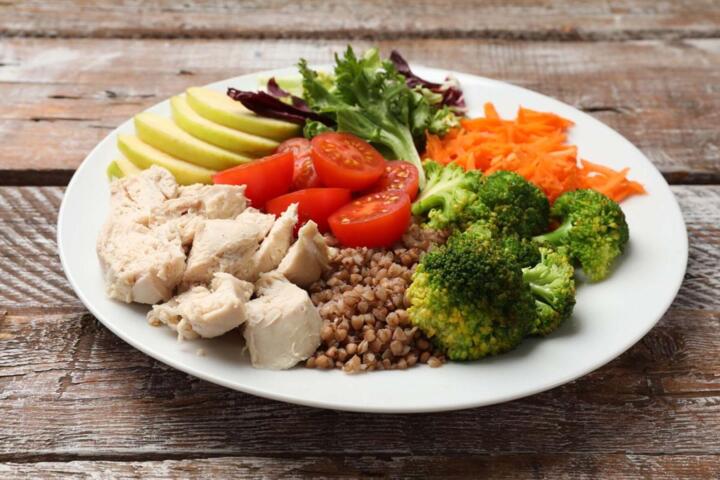
Balanced Plate Basics
A balanced plate combines different food groups in portions that support steady energy and good nutrition. The idea is simple: build meals around vegetables, quality protein, fiber-rich carbohydrates, and healthy fats rather than focusing on one nutrient alone.
The plate method used by many nutrition professionals often suggests filling about half the plate with vegetables and fruit, one quarter with protein, and one quarter with whole grains or other carbohydrate sources. This approach aligns with guidance from organizations such as the Harvard T.H. Chan School of Public Health.
A balanced meal starts visually.
A dinner plate might include roasted broccoli covering half the space, grilled salmon taking a quarter, and quinoa filling the remaining section. A lunch could look different while following the same principle with beans, greens, and whole-grain bread.
Common Plate Errors
Many people think a healthy meal must be small, restrictive, or expensive. That belief often creates meals that lack enough protein or fiber, leaving hunger to return within a few hours.
Another mistake is treating carbohydrates as the problem. The type and portion matter more than removing an entire food group. A cup of lentils and a sugary drink affect the body differently, even though both contain carbohydrates.
Skip chasing perfect portions. Consistency matters more.
Some people also build meals around what is fastest instead of what supports their goals. A frozen pizza once in a while is not the issue, but relying on highly processed foods for most meals can make it harder to meet nutrient needs.
Building Better Meals
Fill Half With Plants
Vegetables and fruits add fiber, vitamins, minerals, and water to meals without adding large amounts of calories. Aim for several colors across the week rather than forcing the same vegetables every day.
A practical serving might include 2 cups of leafy greens at lunch or 1 cup of roasted vegetables at dinner. Frozen vegetables from brands like Birds Eye can work well because they keep preparation simple.
Add Quality Protein
Protein helps maintain muscle tissue and supports fullness after meals. Many adults benefit from including a protein source at each meal, often around 20–40 grams depending on body size and activity level.
Options include eggs, Greek yogurt, chicken, tofu, fish, beans, and lentils. A breakfast with 2 eggs and Greek yogurt creates a different nutritional profile than toast alone.
Choose Smart Carbs
Whole grains and high-fiber carbohydrates support energy because they digest more slowly than many refined options. Foods like oats, brown rice, barley, and sweet potatoes can fit easily into daily meals.
A half-cup to 1 cup portion of cooked grains is a common starting point for many adults. People who train heavily may need more fuel, while less active individuals may prefer smaller portions.
Include Healthy Fats
Healthy fats improve flavor and help the body absorb fat-soluble vitamins. Small portions often work well because fats contain about 9 calories per gram.
Add 1 tablespoon of olive oil, a small handful of nuts, or a quarter avocado to a meal. I keep a bottle of extra virgin olive oil near the stove, a small habit that makes balanced cooking easier.
Adjust Meal Timing
Meal timing affects energy and hunger patterns. A person who skips breakfast and eats a large evening meal may experience stronger cravings later at night.
Spacing meals around 3–5 hours apart works well for many people. The best schedule depends on work hours, exercise habits, and individual preferences.
Build Restaurant Plates
Balanced eating does not disappear outside the home. Restaurants often serve larger portions, so simple choices can change the overall meal.
Choose a protein-centered main dish, add vegetables when available, and consider sharing large sides. This approach works at casual restaurants and places like Chipotle, where customers can select individual ingredients.
Meal Examples
A busy parent changed weekday dinners after noticing frequent afternoon fatigue. The family replaced takeout meals 4 nights per week with simple plates containing chicken, frozen vegetables, and brown rice. After 10 weeks, they reported fewer energy crashes and more consistent meal patterns.
A workplace wellness program at a small technology company encouraged employees to build lunches around vegetables and protein instead of snacks alone. After 3 months, participants reported higher lunchtime satisfaction and reduced afternoon snacking.
Plate Comparison
| Meal | Issue | Fix |
|---|---|---|
| Pasta only | Low protein | Add beans |
| Salad only | Low energy | Add grains |
| Snack meal | Low fiber | Add plants |
Common Mistakes
Building every meal around calories alone is a common mistake. Two meals with identical calories may create very different levels of fullness depending on protein, fiber, and food quality.
Another problem is copying someone else’s plate without considering personal needs. An endurance runner and an office worker may require different amounts of food, which frankly many online plans ignore.
Avoid changing everything overnight. Start with one meal, repeat it for several days, then expand the habit.
FAQ
What should a balanced plate include?
A balanced plate usually includes vegetables, protein, high-fiber carbohydrates, and a source of healthy fat in suitable portions.
How much protein should a meal have?
Many adults aim for around 20–40 grams per meal, though needs vary based on age, body size, and activity.
Are carbohydrates part of a healthy diet?
Yes. High-fiber carbohydrates such as oats, beans, and whole grains can support energy and fullness.
Can a balanced plate help with weight control?
Balanced meals may support weight goals by improving fullness and reducing frequent hunger between meals.
Do I need exact portions every day?
No. Visual guides and consistent meal patterns often work better than measuring every ingredient.
Author's Insight
I have found that people succeed with nutrition changes when meals become easier to repeat. My approach is to improve the plate already being eaten rather than replace everything at once. I still use a simple plate method because it works in restaurants, family kitchens, and busy schedules. Food choices become clearer after people understand what each part of the meal does.
Key Points
A balanced plate combines plants, protein, carbohydrates, and healthy fats in practical portions. Start by changing one meal each day and focus on patterns rather than perfection. A nourishing plate should support your life, not make eating feel like a constant project.