Wrist Vs Chest HR Accuracy
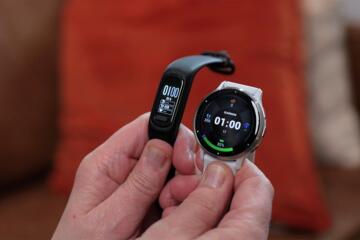
Heart-rate (HR) tracking during exercise helps you pace effort, monitor recovery, and keep training within a target intensity range. Wrist optical sensors and chest straps both report HR, but they measure different signals and react differently to motion, sweat, and fit. For example, a wrist device may read smoothly during a steady walk yet lag or jump during intervals, while a chest strap often tracks more consistently when your arms swing or your cadence changes.
In practice, the “accuracy” question depends on what you mean by accuracy: matching your true HR at a moment in time, tracking the direction of change, or producing a stable average over a workout. Wrist devices can be useful for trends, while chest straps tend to reduce moment-to-moment error during vigorous exercise. The trade-off is that chest straps require correct placement and can be uncomfortable for some users, while wrist devices are easier to wear and start.
2>Common Accuracy Pitfalls
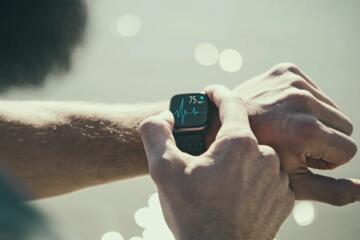
Many people assume that any HR number shown on a screen is equally trustworthy across exercise types. That assumption breaks down because optical wrist sensors rely on light absorption changes in superficial blood flow, while chest straps detect electrical activity related to heart rhythm. When the signal quality drops, the wrist sensor may estimate HR from partial data, leading to delays, spikes, or dropouts.
Wrist HR accuracy often worsens under conditions that disrupt the optical signal: rapid arm movement, wrist rotation, loose contact, thick skin or tattoos, cold hands, and heavy sweating that changes how light penetrates the skin. Even small changes in sensor pressure can alter the amount of blood in the measurement path. During high-intensity intervals, the combination of higher HR, faster motion, and breathing changes can increase the chance of tracking errors.
Chest straps can also show errors, but the failure modes differ. If the strap is too loose, positioned too high or low, or dried out after repeated use, the electrical signal can be noisy or intermittent. Some users also experience skin irritation from the electrodes or the strap material, which can lead to inconsistent contact. In both systems, poor fit is a major driver of inaccurate readings.
Another frequent misunderstanding is treating HR as a direct measure of effort without considering context. HR varies with heat, hydration status, caffeine, sleep, stress, and illness. A device that is accurate can still show a higher or lower HR than expected for reasons unrelated to fitness. Conversely, a device that is inaccurate can create the illusion that your physiology changed when the issue was sensor signal quality.
How To Improve Readings
Fit And Placement Checks
For wrist sensors, tighten the band so the sensor stays in consistent contact without cutting off circulation. Place the device about a finger-width above the wrist bone and keep it aligned with the skin. During exercise, watch for visible gaps or frequent sliding; sliding often correlates with sudden HR jumps or dropouts. For chest straps, position the electrodes so they sit firmly on the sternum area and ensure the strap is snug enough that it does not shift when you run or row.
These steps work because both technologies depend on stable contact with the body. Optical sensors need consistent skin pressure and minimal motion relative to the skin surface, while electrode-based straps need stable electrical contact to reduce noise. In practice, a quick “shake test” helps: if the wrist device visibly moves on the skin during arm swings, HR readings are more likely to drift.
Realistic outcome: with correct fit, wrist HR often becomes more stable during steady cardio, while chest strap HR typically remains consistent during intervals. If you still see frequent wrist dropouts during hard efforts, the limitation is usually signal quality rather than your training.
Compare Against A Reference
Use a reference method to interpret accuracy rather than relying on a single workout. A practical approach is to run a short session with both devices (wrist and chest) and, if available, compare to a manual pulse count for 30–60 seconds at a few time points. Manual pulse checks are not perfect, but they help identify whether the wrist sensor is lagging or overshooting during specific phases like warm-up, peak intervals, or cool-down.
This works because it separates two questions: whether the device tracks your HR changes, and whether it matches your HR at a given moment. In practice, if the chest strap aligns closely with manual counts while the wrist device shows a consistent delay of several beats, you can treat wrist HR as a lagging trend during similar workouts.
Realistic outcome: many users find that wrist HR averages over a full workout can look reasonable even when peak moments are off. Chest straps often reduce peak-time errors, which matters most for interval pacing and recovery decisions based on HR thresholds.
Use The Right Workout Context
Accuracy differs by exercise type. Wrist HR tends to be less reliable during activities with strong arm motion or frequent wrist rotation, such as running, rowing, tennis, and kettlebell work. It often performs better during cycling, elliptical training, or brisk walking where arm movement is smaller and more consistent. Chest straps usually handle high motion better, but they can still be affected by strap slippage during sweat-heavy sessions.
This works because optical sensors measure changes in blood volume in the skin and are sensitive to motion artifacts. Electrical straps detect heart electrical activity and are less dependent on arm movement, though electrode contact still matters. In practice, if your training plan includes interval work, consider using chest strap readings for pacing decisions and wrist readings for general trend awareness.
Realistic outcome: during steady-state cycling, wrist HR may track closely enough for most pacing purposes. During sprint intervals with high cadence and arm swing, wrist HR errors are more likely to show up as sudden spikes or delayed peaks.
Interpret Trends Over Moments
When you cannot verify exact accuracy, treat HR as a trend signal. Look at how HR changes across the workout rather than focusing on a single number at the peak of an interval. For example, if your HR rises steadily during warm-up and then drops during recovery, the direction of change can still be informative even if the absolute value is slightly off.
This approach works because many wrist sensor errors are systematic (such as lag) rather than random. Trend-based interpretation reduces the impact of brief artifacts. In practice, you can set training decisions around ranges and recovery patterns instead of exact beat-per-minute targets.
Realistic outcome: trend interpretation can help you avoid overcorrecting pacing due to a transient wrist spike. It also reduces frustration when wrist HR briefly disconnects during high-motion segments.
Educational Case Examples
Example 1 (Interval running): A user runs 6 x 400 meters with 200 meters easy jogging. The chest strap shows HR rising quickly at the start of each hard segment and dropping during recovery. The wrist device shows HR that rises more slowly and sometimes overshoots during the transition from recovery to the next interval. The user learns to base interval pacing on the chest strap or on perceived exertion, using wrist HR mainly to confirm that the overall pattern matches the session plan.
Example 2 (Cycling steady state): A user cycles for 45 minutes at a consistent effort. The wrist device tracks HR smoothly with small fluctuations, and the chest strap readings closely match the wrist average. During a brief surge of effort near minute 30, the wrist device lags by a few beats but returns to alignment afterward. The user decides that wrist HR is adequate for steady cycling and uses chest strap only when workouts include repeated high-intensity surges.
Wrist Vs Chest Checklist
| Decision Point | Wrist Optical Sensor | Chest Strap | What To Do |
|---|---|---|---|
| Best Fit For | Low-to-moderate motion workouts | Intervals and high arm motion | Match device choice to workout type |
| Common Error Pattern | Lag, spikes, dropouts during motion | Intermittent signal from poor electrode contact | Check fit and skin contact before blaming physiology |
| Warm-Up Behavior | May take longer to settle | Often tracks quickly if electrodes are stable | Compare during the first 5 minutes of training |
| How To Validate | Manual pulse checks at time points | Manual pulse checks or cross-check with another sensor | Use short comparisons rather than one long session |
| When Numbers Matter Most | Trend-based pacing | Peak and recovery timing | Use chest strap for interval thresholds when available |
Common Mistakes
One mistake is wearing a wrist device too loosely. Loose contact increases motion artifacts and can cause the sensor to lose track during hard efforts. Another mistake is placing the device too close to the wrist bone or on a different spot each workout; inconsistent placement changes the measurement path.
People also forget to clean sensors and electrodes. Optical sensors can accumulate residue from sweat and sunscreen, which alters light transmission. Chest strap electrodes can dry out or accumulate film, increasing electrical noise and leading to intermittent HR readings.
Another common error is comparing devices during different activities. If you compare wrist HR from running to chest strap HR from cycling, differences may reflect exercise physiology and movement patterns rather than device accuracy. A better comparison uses the same workout segment and similar intensity.
Finally, some users overreact to brief spikes. Wrist sensors can produce short-lived artifacts when the arm swings or the sensor pressure changes. Treating a single beat-per-minute spike as a true physiological event can lead to unnecessary pacing changes.
FAQ
Which Tracks Peak HR Better?
Chest straps generally track peak HR more consistently during high-motion intervals because they detect electrical signals and rely less on skin light absorption. Wrist sensors can lag or spike during rapid movement, so peak values may be less reliable.
Why Does Wrist HR Jump During Intervals?
Optical wrist sensors can misread when arm motion, wrist rotation, or inconsistent contact disrupts the light signal. Sweat and changes in skin pressure can also reduce measurement stability, leading to sudden spikes or brief dropouts.
Can A Chest Strap Lose Signal?
Yes. If the strap is too loose, positioned incorrectly, or electrodes are dry or dirty, the electrical signal can become intermittent. Skin irritation can also reduce contact quality.
Is Wrist HR Accurate Enough For Training?
For many steady workouts, wrist HR can be accurate enough for trend-based pacing. For interval work where exact timing at specific HR ranges matters, chest strap readings are often more dependable, though individual fit and device behavior still vary.
How Should I Validate My Device?
Compare readings during the same workout segment and intensity. Use manual pulse checks for short intervals and observe whether the wrist device consistently lags, overshoots, or drops out compared with a more stable reference.
Author's Insight
Wrist optical HR and chest strap HR measure different biological signals, so their error patterns differ under exercise. Optical wrist sensors are sensitive to motion artifacts and contact pressure, which explains why readings often drift during high arm movement. Chest straps depend on stable electrode contact and can fail when the strap shifts or electrodes dry out, but they typically handle vigorous motion better. For most people, the practical goal is not perfect beat-by-beat accuracy; it is consistent tracking of HR trends and reliable pacing decisions during the workout segments that matter.
Key Takeaways
- Wrist HR accuracy often drops during high-motion exercise due to optical signal disruption from movement and contact changes.
- Chest straps usually track HR more consistently during intervals when electrode contact is stable.
- Fit and placement drive performance for both systems; loose wrist bands and shifting straps commonly cause errors.
- Validate with short comparisons and interpret HR as trends when exact moment-to-moment accuracy is uncertain.