Sleep Stages In Plain Terms
Sleep trackers aim to estimate sleep stages, usually grouped into REM sleep, “deep sleep” (often called N3), and lighter sleep. REM sleep is associated with vivid dreaming and brain activity patterns that differ from non-REM stages. Deep sleep (N3) is linked to slower brain waves and is often discussed in relation to physical recovery, though the body’s recovery processes involve multiple systems across the whole night.
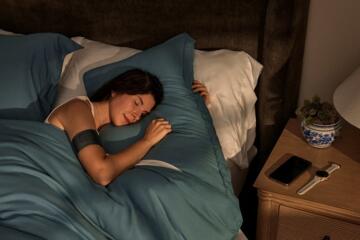
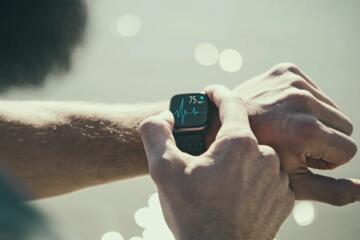
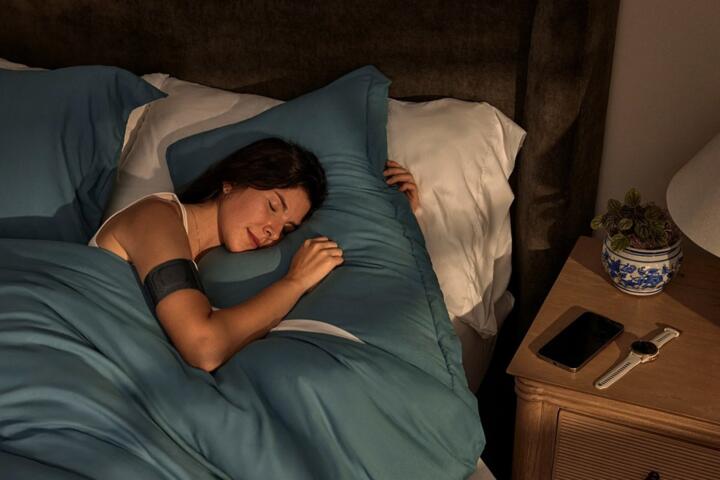
Most consumer devices do not measure sleep stages directly. They infer stages from signals such as wrist movement, heart rate patterns, and sometimes skin temperature or blood oxygen trends. A practical example: if you toss and turn less and your heart rate becomes more stable, a tracker may label more time as deep sleep, even though the underlying brain-wave pattern that defines N3 is not measured.
Because the device is estimating, the most useful output is usually a pattern over time rather than a single-night “score.” People often use these estimates to decide whether they slept “well,” to compare weekdays versus weekends, or to judge whether a change like earlier bedtime helped. Those decisions can be reasonable when interpreted as trends, but they become misleading when treated as exact stage durations.
Where REM And Deep Data Go Wrong
Stage estimation errors come from the gap between what defines REM and deep sleep and what consumer sensors can observe. Polysomnography (the reference method in sleep labs) uses brain-wave recordings (EEG) plus eye movement and muscle activity. Wrist-worn sensors cannot directly measure EEG, so they rely on indirect markers that overlap across stages.
One common issue is that movement and heart rate do not map cleanly to specific stages. For example, some people remain still during lighter sleep, while others move during parts of non-REM sleep. Heart rate also changes with breathing patterns, stress, caffeine timing, and temperature, which can shift the tracker’s stage labels without changing the actual stage proportions.
Another source of error is the way devices define “deep sleep.” Many trackers label deep sleep using proprietary thresholds and may treat brief awakenings or stage transitions differently. If a device smooths the data, it can shift minutes from one stage to another, especially when sleep is fragmented.
REM sleep estimation is also sensitive to individual physiology and sleep behavior. REM often occurs in cycles that repeat across the night, with longer REM periods later in the sleep window. If a tracker misreads late-night restlessness, alcohol effects, or medication-related changes in autonomic tone, it may over- or under-estimate REM time.
Real-world consequences of misinterpretation include chasing numbers that do not reflect brain activity, changing routines based on a single night, and overlooking sleep problems that require clinical evaluation. For instance, someone may see “low deep sleep” and focus on supplements or timing changes while the underlying issue is frequent awakenings from sleep apnea, restless legs, or circadian misalignment.
Biologically, sleep stages are regulated by multiple interacting systems: the circadian clock, sleep pressure, autonomic nervous system activity, and brain circuits that govern REM generation and slow-wave activity. Indirect signals can track some of these shifts, but they cannot fully separate them into REM versus N3 with the precision of EEG-based measurement.
How To Read Tracker Results
Use Trends, Not Single Nights
Trackers are best interpreted as a directional signal. A practical approach is to compare averages across 2–4 weeks rather than reacting to one “bad” night. If deep sleep estimates rise gradually after consistent bedtime timing, that pattern is more informative than a one-night spike or drop.
In practice, record three simple metrics: total sleep time estimate, number of awakenings or “wake events,” and the proportion of time labeled as REM and deep sleep. If REM time fluctuates widely night to night, that variability may reflect estimation noise. If it changes consistently alongside sleep timing, that change is more likely tied to real sleep structure shifts.
Tools that help include the tracker’s own trend charts and a basic sleep diary. A diary does not validate stage labels, but it can reveal whether “low deep sleep” coincides with late caffeine, alcohol, irregular bedtimes, or a stressful schedule.
Check Sensor Conditions And Fit
Wrist sensors depend on stable contact and good signal quality. A loose band, a sensor placed over hair or scar tissue, or movement artifacts can distort heart rate and motion signals, which then affects stage classification.
In practice, wear the device snugly enough that it does not slide during sleep, and keep it positioned consistently on the wrist. If the app flags low signal quality or missing data, treat the stage breakdown as less reliable for that night.
Some devices also estimate sleep using heart rate variability patterns and motion. If you sleep with the device on a different wrist than usual, or you switch between devices, stage comparisons become less meaningful because the estimation models may differ.
Validate With Reference Signals
Even without EEG, you can cross-check whether the tracker’s “sleep quality” story matches other observable factors. If the tracker reports short sleep and low deep sleep, but you feel refreshed and have stable daytime alertness, the stage numbers may be less aligned with your experience. If the tracker reports fragmented sleep and low REM, and you also have persistent sleepiness, morning headaches, or frequent awakenings, that mismatch between “estimated stages” and symptoms still points to a real sleep disruption that deserves attention.
In practice, compare stage estimates with consistent outcomes: time to fall asleep, how often you wake, and how you function the next day. A reasonable expectation is that estimation errors will not perfectly match symptoms, but repeated patterns can still help you identify when sleep is behaving differently.
For people with symptoms that suggest a sleep disorder, the most reliable next step is discussing symptoms with a clinician rather than relying on stage estimates. Consumer stage numbers are not a substitute for diagnostic testing when symptoms are present.
Use Stage Data For Behavior Experiments
Stage estimates can guide behavior experiments when the goal is to test timing and consistency, not to “optimize” a specific REM or deep sleep target. For example, you can test whether shifting bedtime earlier by 30–60 minutes for two weeks changes the tracker’s REM and deep sleep trends while keeping wake time stable.
What it looks like in practice: if your wake time stays constant and your sleep window becomes more consistent, you may see fewer wake events and a more stable distribution of REM across the night. If deep sleep estimates rise while total sleep time also increases, the change may reflect longer time asleep rather than a direct stage-specific effect.
Realistic outcomes: stage estimates often move modestly with behavioral changes, and day-to-day variability is common. A change of a few tens of minutes in estimated deep sleep across weeks can be meaningful as a trend, but it should be interpreted alongside total sleep time and sleep fragmentation.
Educational Case Examples
Case 1: Weekend Catch-Up
A person sleeps 7 hours on weekdays and 9 hours on weekends. Their tracker shows higher deep sleep on weekends and lower REM on some weekday nights. The person initially concludes that weekdays are “damaging” sleep stages. A diary review shows later caffeine on weekdays and a later bedtime on weekends, plus more consistent wake time on weekdays. Over two weeks of keeping wake time consistent and moving caffeine earlier, the tracker’s deep sleep estimates become less variable, suggesting that timing consistency and arousal factors influenced the stage labels.
Case 2: Fragmented Sleep After Alcohol
Another person reports frequent awakenings after evening alcohol. Their tracker labels reduced REM and reduced deep sleep on those nights. The person assumes alcohol directly “removes” REM and deep sleep. A closer look shows that the awakenings increase, and the sleep window becomes more fragmented. With alcohol removed for two weeks, awakenings decrease and the stage breakdown becomes more stable. The lesson is not that the tracker is perfectly accurate, but that fragmentation and autonomic changes can shift the signals used for stage estimation.
Comparison Checklist For Interpretation
| Question | If Yes | If No | How To Use The Data |
|---|---|---|---|
| Was the device signal stable? | Stage estimates are more trustworthy for that night. | Stage breakdown may be noisy or biased. | Rely more on trends across nights with good signal. |
| Did awakenings increase? | Lower REM/deep estimates may reflect fragmentation. | Stage changes may be smaller or harder to interpret. | Interpret stage shifts alongside wake events. |
| Did total sleep time change? | Stage minutes may change simply because you slept longer/shorter. | Stage proportions may be more informative. | Compare both minutes and proportions over weeks. |
| Do symptoms match the pattern? | A real sleep disruption is more likely. | Stage numbers may not reflect your experience. | Use symptoms to decide when to seek evaluation. |
Common Mistakes With Stage Data
- Treating stage minutes as exact. Consumer devices estimate stages from indirect signals, so single-night REM or deep sleep values can be misleading.
- Comparing across different devices. Different models use different algorithms and sensor placements, so stage percentages may not match.
- Ignoring sleep fragmentation. If awakenings increase, stage estimates often shift because the underlying signals change, even if the person’s “sleep quality” feels similar.
- Overcorrecting after one bad night. Changing multiple variables at once (bedtime, caffeine, alcohol, exercise timing) makes it hard to identify what actually changed.
- Assuming low deep sleep explains daytime sleepiness. Daytime symptoms can arise from many causes, including insufficient total sleep, circadian misalignment, medication effects, or sleep-disordered breathing. Stage estimates do not rule these out.
FAQ
How accurate are REM and deep sleep estimates?
Accuracy varies by device and by person. Consumer trackers estimate stages using indirect signals, so they can misclassify minutes between REM, deep sleep, and lighter sleep. Trends over weeks tend to be more informative than single-night values.
Why does my tracker show low deep sleep some nights?
Low deep-sleep estimates can reflect true changes in sleep structure, but they also occur when heart rate and movement patterns shift due to stress, alcohol, caffeine timing, temperature, or fragmented sleep.
Can I trust the REM percentage on my sleep report?
Use REM percentage as a rough indicator, not a measurement. If REM estimates change alongside consistent changes in bedtime timing and awakenings, the pattern may be meaningful; if changes occur with unstable sensor contact or missing data, treat them as less reliable.
Do sleep trackers measure deep sleep the same way as sleep labs?
No. Sleep labs use EEG and other signals to define stages. Trackers infer stages from wearable sensors, so their “deep sleep” label may not match the lab’s N3 definition minute-for-minute.
What should I do if my tracker shows persistent stage problems?
If you have ongoing symptoms such as excessive daytime sleepiness, loud snoring, choking/gasping at night, or frequent awakenings, focus on symptoms and discuss them with a clinician. Stage estimates can help you describe patterns, but they do not replace diagnostic evaluation.
Author's Insight
Consumer sleep trackers estimate REM and deep sleep using indirect physiological signals, so their stage labels behave like probabilistic guesses rather than direct measurements. The most reliable way to use them is to interpret changes in the context of sleep timing, awakenings, and sensor signal quality. When stage estimates conflict with symptoms, the symptom pattern deserves priority because it reflects real-world sleep disruption. For decision-making, trends across multiple weeks usually carry more weight than any single night’s REM or deep sleep minutes.
Key Takeaways
- REM and deep sleep on wearables are estimates derived from indirect signals, not EEG-based measurements.
- Single-night stage numbers can be noisy; look for consistent trends over 2–4 weeks.
- Interpret stage changes alongside awakenings and total sleep time to avoid misattributing fragmentation to stage-specific effects.
- If symptoms suggest a sleep disorder, use tracker data only as background information and seek appropriate clinical evaluation.